Firewood Cord Calculator
On this page
Measure the stack, enter the numbers, and see what you actually have. Works for a stack in your yard or a load a seller just delivered.
How the calculator works
A full cord is a tightly stacked pile of wood and air space that measures 128 cubic feet — usually 4 feet high, 8 feet long and 4 feet deep. So:
- Cubic feet = length × height × (piece length in inches ÷ 12)
- Full cords = cubic feet ÷ 128
- Face cords = (length × height) ÷ 32, because a face cord is one 4 ft × 8 ft face of wood at whatever piece length the seller cuts
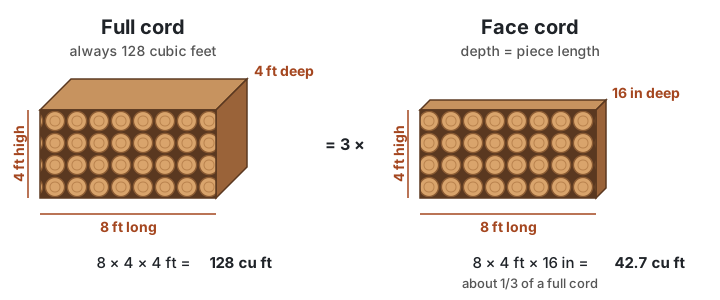
The piece length is the depth of the stack. With 16-inch pieces, one face cord is a third of a full cord. With 12-inch pieces it is only a quarter.
Example
A seller delivers a stack 10 ft long and 4 ft high, with 16-inch pieces, for $180.
- 10 × 4 × (16 ÷ 12) = 53.3 cubic feet
- 53.3 ÷ 128 = 0.42 full cords
- Price per full cord equivalent: $180 ÷ 0.42 = about $432
That's how you compare a "face cord for $180" against "a full cord for $400" — convert both to price per full cord.
Measuring tips
- Measure the average height. Stacks settle and lean; take the height at several points.
- Measure piece length on several pieces — sellers' "16-inch" wood is often shorter.
- Only count the wood that is actually stacked tight. Big gaps, crooked pieces and loose tops mean less wood.
- Thrown or dumped wood in a truck bed can't be measured accurately. Stack it, then measure.